 admin
admin
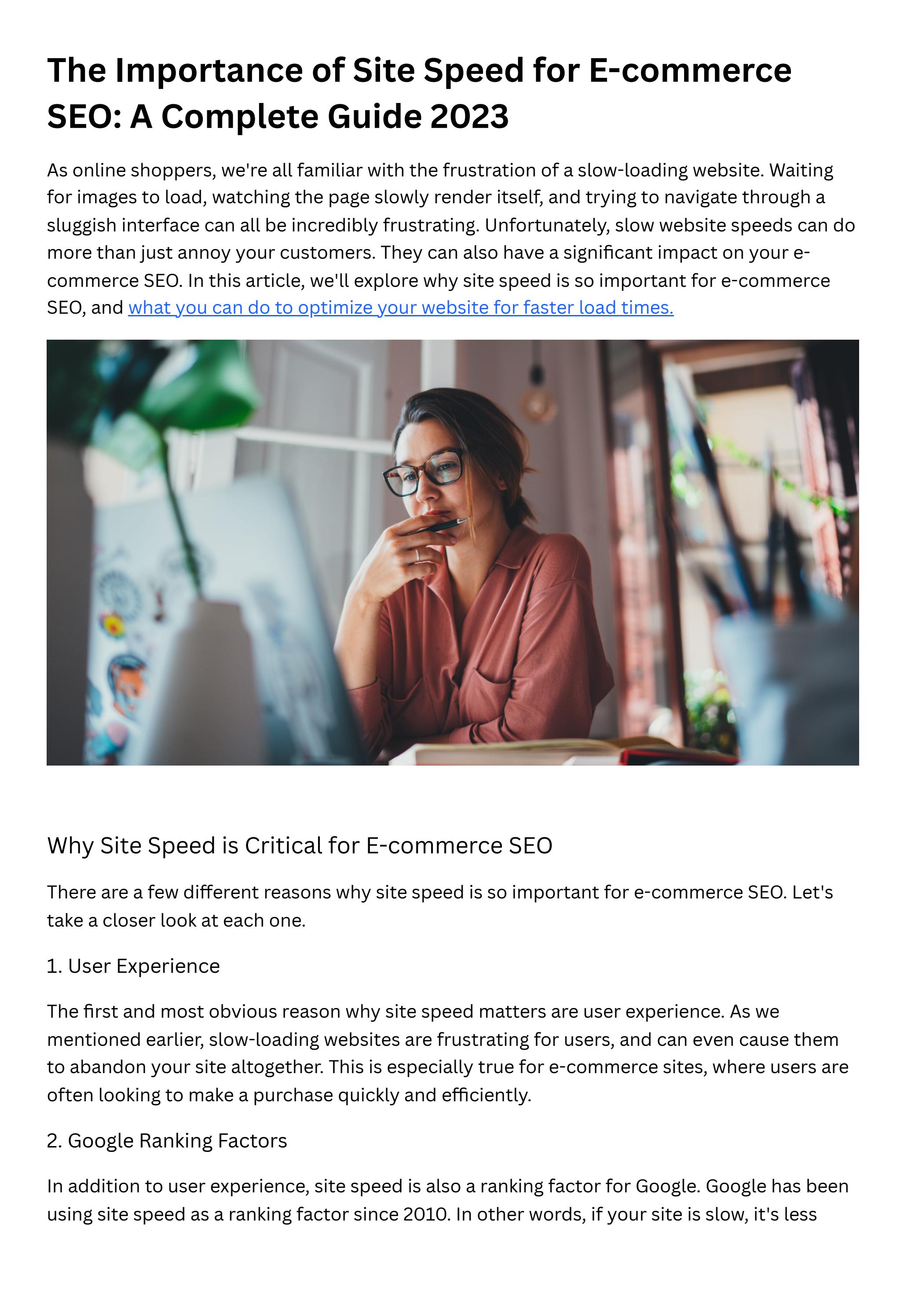
Ever clicked on an e-commerce site and waited… and waited… and waited? Frustrating, right? In today’s fast-paced digital world, site speed is everything. If your e-commerce site is slow, you’re not just annoying potential customers; you’re losing sales and damaging your brand. But don’t worry, I’m here to help you turn that sluggish site into a speed demon! Let’s dive into how to improve your e-commerce site speed and boost your business. We will also discuss the importance of internal linking, and how it can improve your search engine optimization. For example, you can use internal links to point to your product pages, or to your blog posts. This will help Google understand the structure of your site, and it will also help users find the information they are looking for. For example, if you have a blog post about “how to select the right shoes”, you can link to your product pages that sell shoes. This will help users find the shoes they are looking for, and it will also help Google understand that your site is about shoes. You can also use internal links to point to your other blog posts. This will help users find more information about the topic they are interested in, and it will also help Google understand that your site is about that topic. For example, if you have a blog post about “how to select the right shoes”, you can link to your other blog posts about shoes, such as “the optimal shoes for running” or “the optimal shoes for hiking”. This will help users find more information about shoes, and it will also help Google understand that your site is about shoes. Internal linking is a great way to improve your search engine optimization, and it is also a great way to help users find the information they are looking for. So make sure to use internal links on your e-commerce site!
Why Site Speed Matters: The Need for Speed
Okay, let’s get real. Why should you even care about e-commerce site speed? Imagine walking into a store, and it takes you forever to find what you need. Frustrating, right? That’s how your customers feel when your site is slow. Site speed is crucial because:
- User Experience: A fast site means happy customers. They can find what they want quickly and easily.
- search engine optimization Ranking: Google loves fast sites! A speedy site can boost your search engine ranking.
- Conversion Rates: Faster sites lead to higher conversion rates. People are more likely to buy if the process is smooth and quick.
- Mobile-First Indexing: With more people shopping on their phones, a fast mobile site is non-negotiable.
Diagnosing Your Site’s Speed: Finding the Culprits
Before you can fix anything, you need to know what’s broken. Here’s how to diagnose your e-commerce site’s speed:
- Google PageSpeed Insights: This tool gives you a score and recommendations for both mobile and desktop.
- GTmetrix: Another great tool that offers detailed performance reports.
- WebPageTest: Offers advanced testing options, including testing from varied locations.
These tools will help you determine the bottlenecks slowing down your site. Is it large images? Too many HTTP requests? Time to find out!
maximize Images: A Picture is Worth a Thousand Bytes
Images are often the biggest culprits when it comes to slow loading times. Here’s how to maximize them:
- Compress Images: Use tools like TinyPNG or ImageOptim to reduce file sizes without sacrificing quality.
- select the Right Format: Use WebP for superior compression and quality, or stick to JPEG for photos and PNG for graphics.
- Use Responsive Images: Serve varied image sizes based on the user’s device. The
srcsetattribute in HTML is your friend here. - Lazy Loading: Load images only when they’re visible in the viewport. This can significantly improve initial page load time. You can implement lazy loading using HTML attributes or JavaScript libraries.
Leverage Browser Caching: Making Your Site Remember
Browser caching allows visitors’ browsers to store static files like images, stylesheets, and scripts. This means that on subsequent visits, the browser doesn’t have to download these files again, making the page load much faster. Here’s how to leverage browser caching:
- Set Proper HTTP Headers: Configure your server to set appropriate
Cache-Controlheaders. These headers tell the browser how long to cache the files. - Use a text Delivery Network (CDN): CDNs store your site’s files on servers around the world, so users can download them from a server that’s geographically closer to them. This reduces latency and improves load times. Popular CDNs include Cloudflare, Akamai, and Amazon CloudFront.
- Enable Gzip Compression: Gzip compression reduces the size of your HTML, CSS, and JavaScript files before sending them to the browser. This can significantly reduce download times. Most web servers support Gzip compression, so check your server’s documentation for instructions on how to enable it.
Minify CSS, JavaScript, and HTML: Streamlining Your Code
Minifying your code means removing unnecessary characters like spaces, comments, and line breaks from your CSS, JavaScript, and HTML files. This reduces the file size and improves load times. Here’s how to do it:
- Use Minification Tools: There are many online and offline tools available for minifying your code. Some popular options include UglifyJS for JavaScript, CSSNano for CSS, and HTMLMinifier for HTML.
- Automate the Process: Integrate minification into your build process using tools like Grunt, Gulp, or Webpack. This ensures that your code is always minified before it’s deployed to your server.
- Combine Files: Reducing the number of HTTP requests can also improve load times. Combine multiple CSS and JavaScript files into a single file to reduce the number of requests the browser has to make. You can use tools like Webpack or Parcel to bundle your files.
So, there you have it! Speeding up your e-commerce site isn’t just a tech thing; it’s a business imperative. By implementing these strategies, you’re not just making your site faster; you’re making it more user-friendly, more profitable, and more rival. Isn’t that what we all want? Now, go forth and make your site the speediest one on the block!
14 Comments
Comments are closed.